Why nutrition is key to ending hunger
Thursday, 9 April, online from 13h30 to 15h00 CET
The world remains off-track to end hunger and malnutrition by 2030. This is not because of a lack of food, but rather a failure to prioritise diet quality and access. Food systems continue to deliver empty calories at the expense of nutrition, with detrimental consequences to public health, environmental sustainability, and inequality. This calls for a shift in how hunger is addressed.
The Hesat2030 initiative, co-chaired by the FAO, Shamba Centre for Food & Climate and CABI, shows that ending hunger is possible. Drawing on an evidence synthesis of 1,832 studies across 83 countries, a new report identifies ten effective interventions in agrifood systems to improve diet quality in low- and lower-middle-income countries. It shows how bundling interventions across agrifood production, markets, and consumption can improve nutrition outcomes while generating co-benefits for incomes, equity, and climate resilience.
This launch will present the report’s findings and convene governments and donors to discuss how this evidence can inform national strategies, investment strategies, and the delivery of Nutrition for Growth commitments.
Welcome
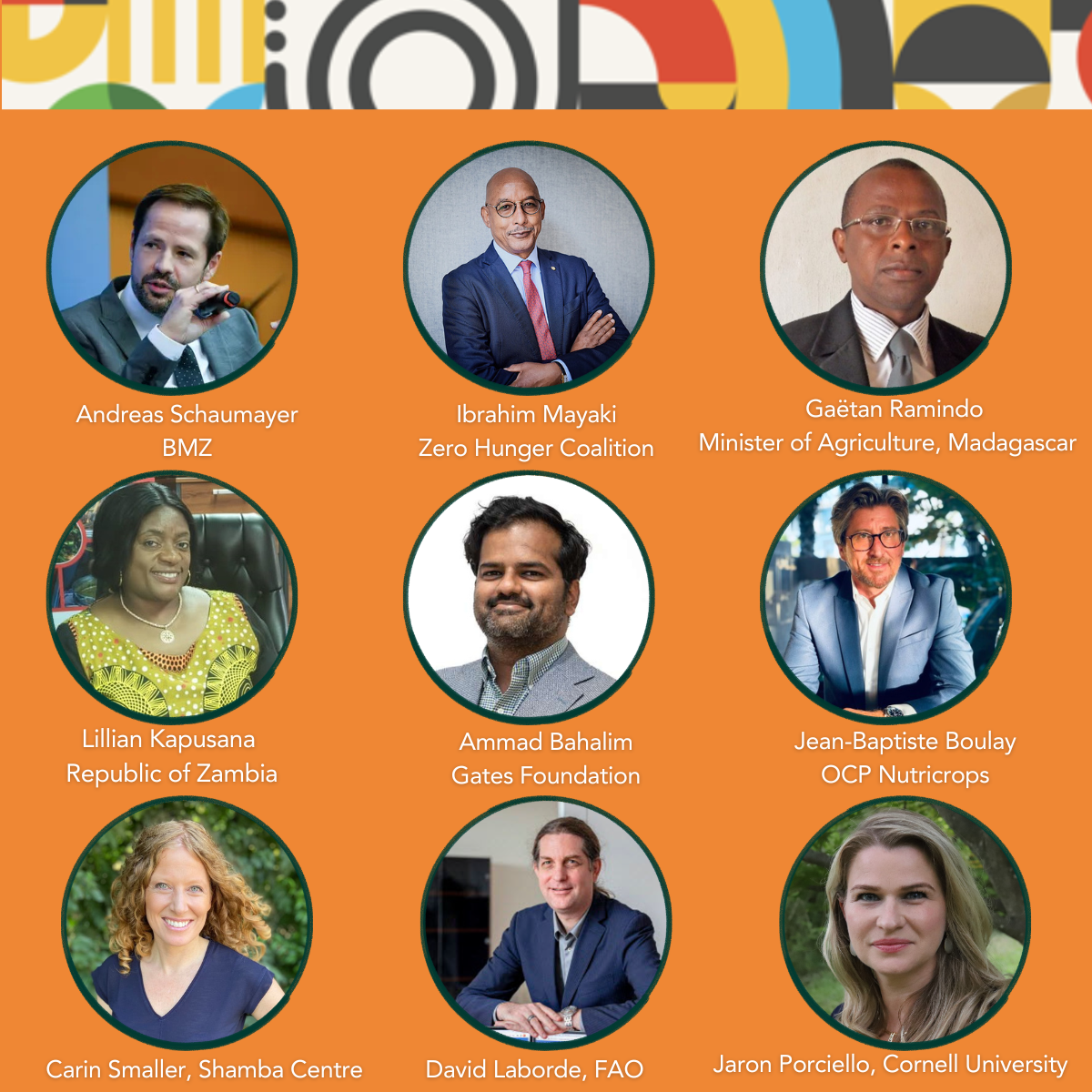
Setting the Scene: Why Nutrition Matters for Ending Hunger with Dr Andreas Schaumayer, Head of Division, Food and Nutrition Security, and Fisheries, German Federal Ministry for Economic Cooperation and Development (BMZ)
Presentation of the Hesat2030 Nutrition report, Can the agricultural development community end hunger differently? Ten high-impact nutrition-sensitive interventions for agrifood systems, with Carin Smaller, Co-Founder and Executive Director of the Shamba Centre with Jaron Porciello, Associate Director from Cornell University and David Laborde, Director, Agrifood Economics Division at the FAO
Panel Discussion: From Evidence to Action with Gaëtan Ramindo, Minister of Agriculture & Food Sovereignty, Madagascar, Lilian Kapusana, Permanent Secretary to the Vice President of the Republic of Zambia, Ammad Bahalim, Senior Program Officer, Bill & Melinda Gates Foundation, and Jean-Baptiste Boulay, Executive Vice President, Nutrition Solution Business Unit, OCP NUTRICROPS
Closing by Dr Ibrahim Mayaki, Chair of the Zero Hunger Coalition and Co-Chair of the ATLAS Initiative (Paris Peace Forum)
The discussion with be moderated by Francine Picard, Co-Founder and Director of Partnerships at the Shamba Centre for Food & Climate. French / English interpretation will be available.
Partners
ATLAS, BMZ, FAO, Gates Foundation, Hesat2030, Paris Peace Forum, SDG2 Advocacy Hub, Shamba Centre for Food & Climate, and the Zero Hunger Coalition.
To register: https://us02web.zoom.us/meeting/register/-uvPtgttSKGddWR05sCKlA#/registration