
The environmental, social and health cost of agrifood systems
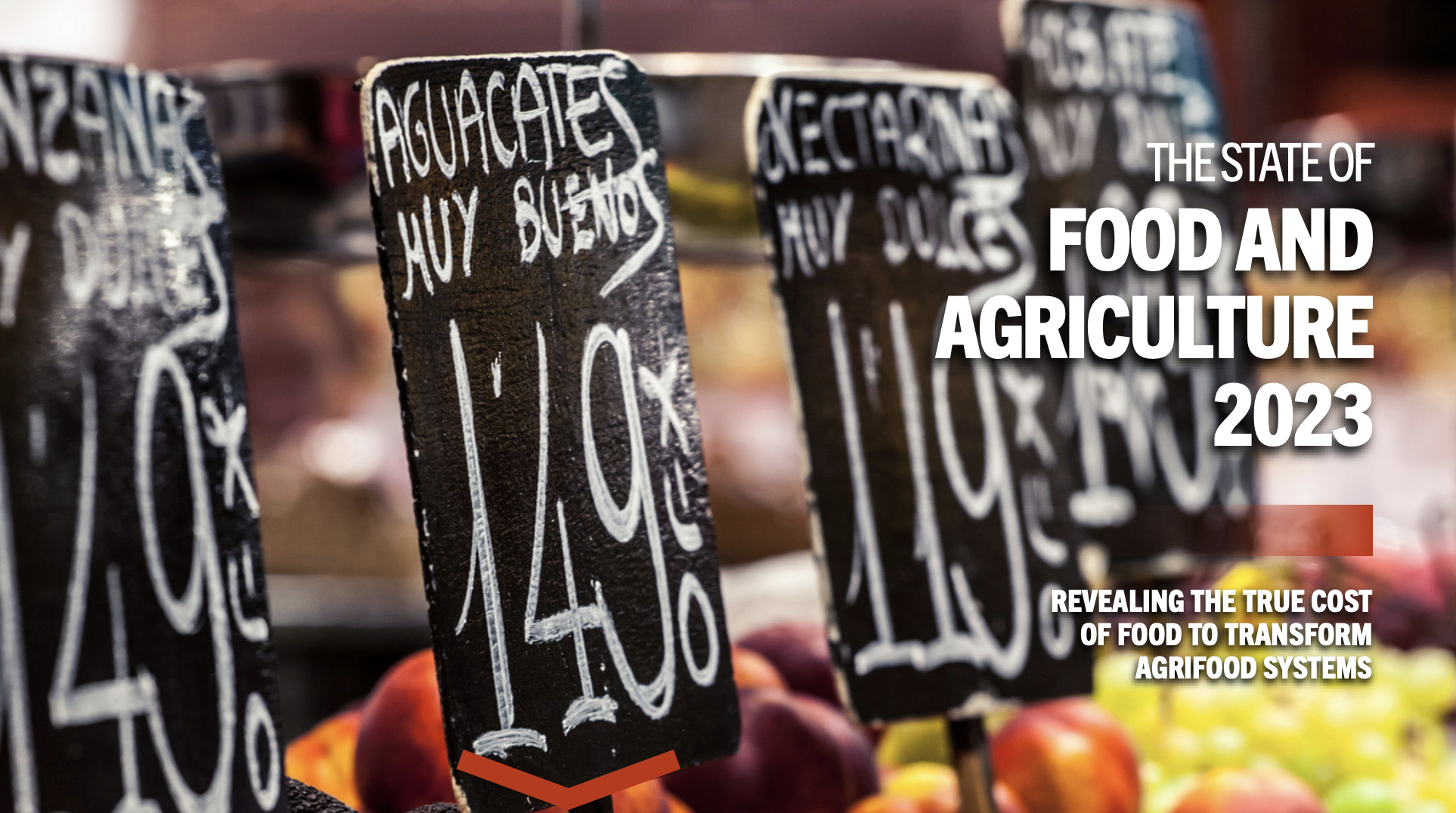
Are the food systems that nourish us also contributing to climate change, natural resource degradation and malnutrition? According to a new examining the true cost of food for sustainable agrifood systems, the ‘hidden costs’ to our health, environment and society has reached at least $10 trillion USD per year. This represents 10% of global GDP. David Laborde, one of the three co-founders and directors of Hesat2030, led the research for this report.
“In the last few years, people have realized planetary boundaries have been put under pressure and, in many cases, crossed. While food is central to our life, it also has significant impact on the environment and health,” he said.
Addressing these negative impacts is challenging, because people, businesses, governments and other stakeholders lack a complete picture of how their activities affect economic, social and environmental sustainability when they make decisions on a day-to-day basis. In hopes that assigning a value to the hidden costs could help to quantify the impact, the report used true cost accounting (TCA) to assess the situation in 154 countries.
The findings
The biggest cost burden was driven by unhealthy diets, accounting for more than 70% of total costs. But this was not only due to undernourishment and its related social costs from poverty – much of it was actually due to obesity and non-communicable diseases, which cause productivity losses.
The combination of overnutrition (obesity) and undernutrition (stunting) results in “a double burden of malnutrition,” Laborde noted.
The report also found that one-fifth of the total costs impact the environment, from greenhouse gas and nitrogen emissions, land-use change and water use. This is a problem that affects all countries, and the scale is likely underestimated due to the limited availability of data, the authors warned.
Focusing on low-income countries
The report found that the hidden cost of food places an outsized burden on low-income countries relative to their national economies. While the global hidden costs are quantified as being equivalent to 10% of GDP, these costs represent an average of 27% of national GDP in low-income countries. In Uganda, for example, the hidden cost of the agricultural system is 20% of GDP, of which 70% is linked to poverty.
As Laborde notes: “We should not just enter this debate with a high-income lens. In the global north, the public discourse has long included discussion of ecosystems and unhealthy diets, but the cost of poverty and malnourishment is overlooked.”
Improving agrifood systems in low-income countries will be instrumental in addressing costs related to poverty and undernourishment, he added.
Finding solutions
The report reveals the urgent need to factor hidden costs into decision-making for the transformation of agrifood systems. Innovations in research and data, alongside investments in data collection and capacity building, are needed to scale the application of TCA, especially in low- and middle-income countries.
Given the considerable variation between countries in relation to the importance of environmental, social and health hidden costs, it will be necessary to produce national estimates of hidden costs and improve them with country-specific information, so they can be a useful input in decision- and policymaking processes.
As a result, a universal solution is unlikely.
“We can’t just increase the price of food and hope that the market will solve the problems,” Laborde notes. “The solutions are more multifaceted; in some cases it’s education, in others, school feeding programmes. We can do a lot, but not if we oversimplify.”
Aligning goals
The approach used to provide a comprehensive assessment of the costs of agrifood systems in the FAO report aligns with the work of Hesat2030. The FAO report defines a holistic and systemic approach that measures and values the environmental, social, health and economic costs and benefits generated by agrifood systems.
Similarly, Hesat2030 recognizes the role of agrifood systems on livelihoods, diets, and climate and environmental outcomes. As Laborde notes, both projects “focus on the three key areas where agrifood systems have an impact: social, health and environment.”