
Discussing food and agricultural issues at the ICN Annual Meeting
12 May 2026 by Carin Smaller, Executive Director
We are sitting at the beach watching a tsunami arrive. This statement from the moderator of a panel discussion on food and agricultural markets during the annual gathering of the International Competition Network, encapsulates the fear – and expectation – of a forthcoming food crisis. Like the food crisis in 2022, there will be a time lag between the spike in fertilizer prices and the rise in food prices.
The panel discussed the ongoing problems that competition authorities face in food and agricultural markets and actions to take to mitigate the worst outcomes. Moderated by Professor Simon Roberts from the Centre for Competition Regulation and Economic Development (CCRED) and the Shamba Centre for Food & Climate, the panel included Farha Nabiha Mustaffa from the Malaysia Competition Commission, Nathalie Jalabert Doury, head of Antitrust & Competition Practice at the MayerBrown, and Eduardo González Martínez from the National Competition Commission of Paraguay.
The current predicament
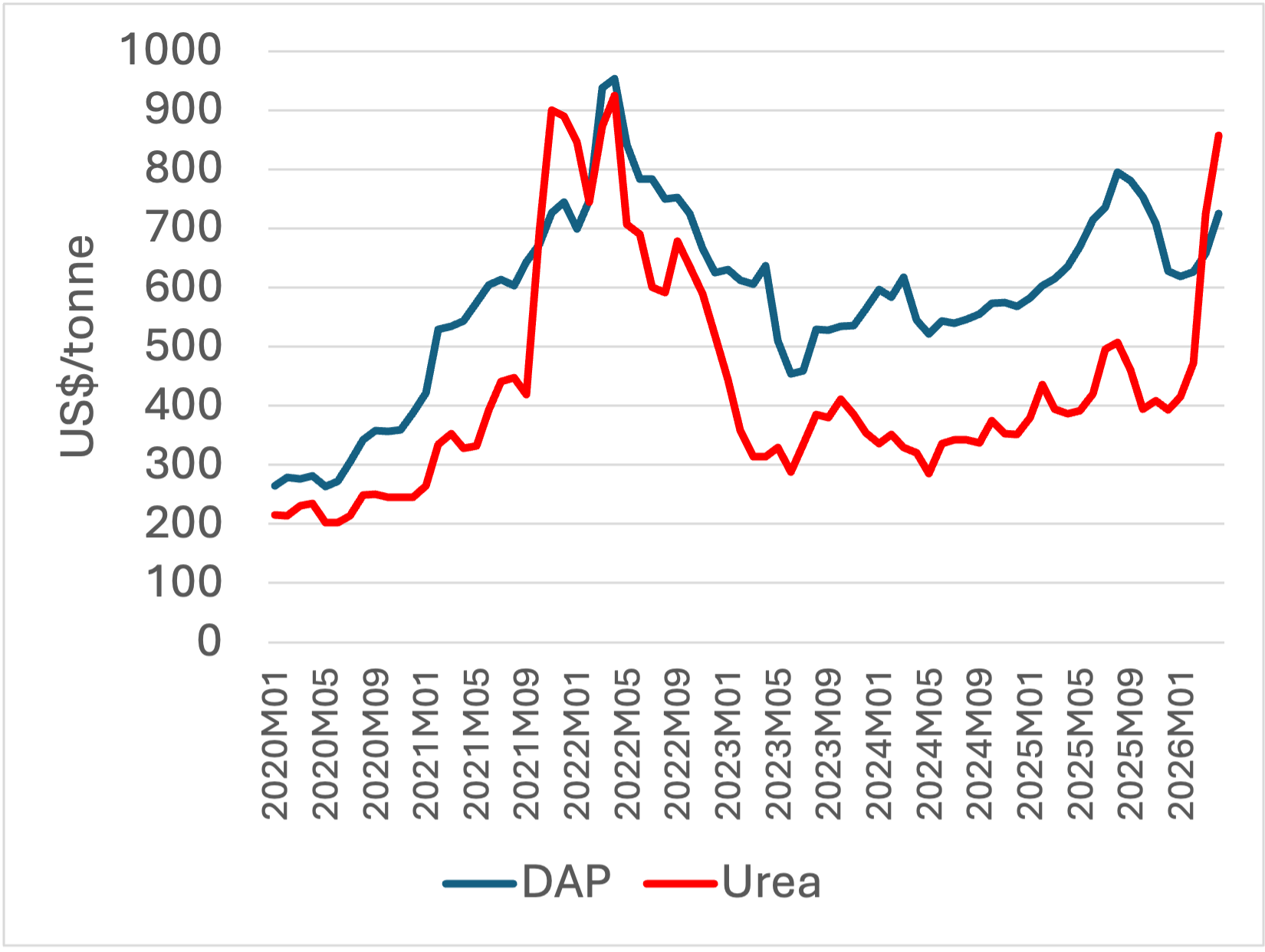
Fertilizer prices have doubled in the past two month. Prior to the US-Israel war on Iran, fertilizer prices stood at USD 400 per tonne; now, they have reached USD 850 per tonne (see below) and nearly the same levels as in 2022. Little doubt exists that less fertilizer will be applied to fields during the next planting season, reducing yields and production levels.
Source: World Bank
The current energy and fertilizer shock is, first and foremost, a global supply shock linked to the war. But the transmission mechanisms and the ensuing adjustments made as this global shock trickles down to the national and local levels will expose how well markets function. For this reason, the current shock must be viewed through the prism of competition and market economies. Why? Because it is a price shock.
The competition issues at the core of the current price shock
Prices are going up like a rocket, but will they come down like a feather? In South Africa, this question is already being asked publicly. And action is being demanded of the Competition Commission to monitor prices and take action.
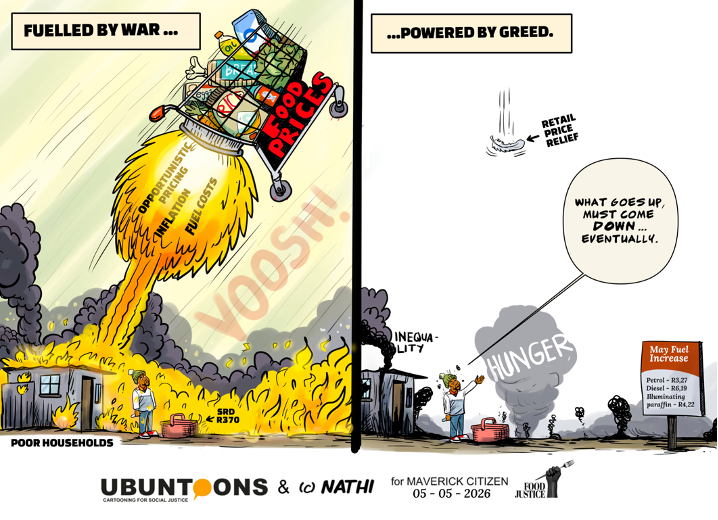
Price monitoring is where competition authorities can intervene. Where markets work well the adjustment post the shock will be swift and relatively painless. Where markets are not working well, the adjustments risk being delayed and painful, particularly for the poorest and most vulnerable. Markets with high levels of concentration will be subject to seller’s inflation or greedflation. This is what occurred after the COVID-19 pandemic where many low-income countries continued to face stubbornly high food prices long after the pandemic ended. This is what could occur again in 12 months’ time.
How regulators can confront food crises
The panel discussion focused on the work of the ICN Special Project on Competition Matters in Agricultural and Food Markets which was initiated in 2023 following worldwide concerns about increasing food prices linked to the Russian war in Ukraine. The topics included how regulators use of tools such as price monitoring and the need for greater cooperation between regulatory agencies when assessing mergers and anti-competitive conduct.
Market reviews have been successfully used in Malaysia to understand competition, market structures and policy issues in areas such as poultry, brown cabbage, onion, fish, rice and vegetables. Malaysia examines prices over a 10-year period to smooth out anomalies, and then does a deep dive into the structure of the market. On the other hand, the competition regulator in Paraguay has set up a market observatory to monitor prices in real time. It is used as a market intelligence tool offering a permanent infrastructure to capture market dynamics and the evolution of prices on a daily basis.
In France, the regulator monitors prices as well as margins through their market observatory. The private sector has mixed views on these monitors given the complexity of the food market, the different regulations between countries and the multiple methodologies used, and suggested that this complicates comparisons between countries. The European Union’s 2019 recommendation on a common methodology is one way forward.
Competition authorities raised their concerns about international mergers and cartels and the need for greater international cooperation given the cross-border nature of company operations. For example, regulators shared their difficulty in obtaining data necessary for a proper merger or cartel assessment given that they are restricted to operations within their national borders. As a result, they miss the big picture. This is where cooperation through the ICN is critical to help authorities to deepen their collaboration so they can better understand how what is happening in one market impacts another market.
In Paraguay, a small country with a population of approximately seven million, the issue of concentration in the beef sector illustrates the problem. The meat packing sector is highly concentrated and involves mostly foreign companies operating across the continent. However, each national authority can only examine conduct in their own jurisdiction even though the relevant market is regional. And, as a small market, Paraguay is impacted by the regulatory decisions make in larger markets. This occurred with the acquisition by Minerva Foods of Marfrig plants in the region was rejected by Paraguay but approved by regulators in Chile, Brazil and Argentina.
Malaysia faces similar problem. The regulator uncovered a cartel operated by five companies in the poultry feed sector. The cartel involved multinational conglomerates with operations throughout the region that sourced their maize and soybeans for the animal feed from Argentina and Brazil. These two examples from Malaysia and Paraguay highlight the importance of the ICN Special Project on Food and Agriculture.
Why we need the ICN Special Project
As the global community stands at the precipice of yet another food price crisis, the work of the Special Project continues to remain relevant. Following the results of a 2024 survey to regulators, the Special Project has developed a working paper on methods for price monitoring and assessing margins, and two deep dives (into the poultry sector and on grain traders) over the past 12 months. These tools offer authorities the data, tools, and resources necessary to monitor prices and respond to the coming food crisis.
The next challenge for the ICN is apparent: how to manage cross-border competition issues. National authorities are identifying cartel conduct in their own markets but then quickly realising that the problem is affecting a much larger group of people beyond their borders. For example, in the poultry sector, Singapore and Korea identified similar problems as those found in Malaysia.
So, what is the way forward?
According to regulators, the ongoing collection and analysis of data is critical to identifying competition concerns. This will be more important than ever considering the energy and fertilizer crisis. ICN members can collaborate through the Special Project by regularly monitoring prices to ensure that prices adjust back to normal levels when the shock is over.
Enhanced collaboration on cross-border mergers and cartels means competition authorities need to do a better job of sharing information, market studies, and methodologies for monitoring and responding. For the COMESA Competition and Consumer Commission, three things are needed: real time information, coordinated economic analysis on regional cases, and capacity building and support for smaller authorities.
As the panellists concluded, information-sharing and cooperation on data collection and sharing will be key.